
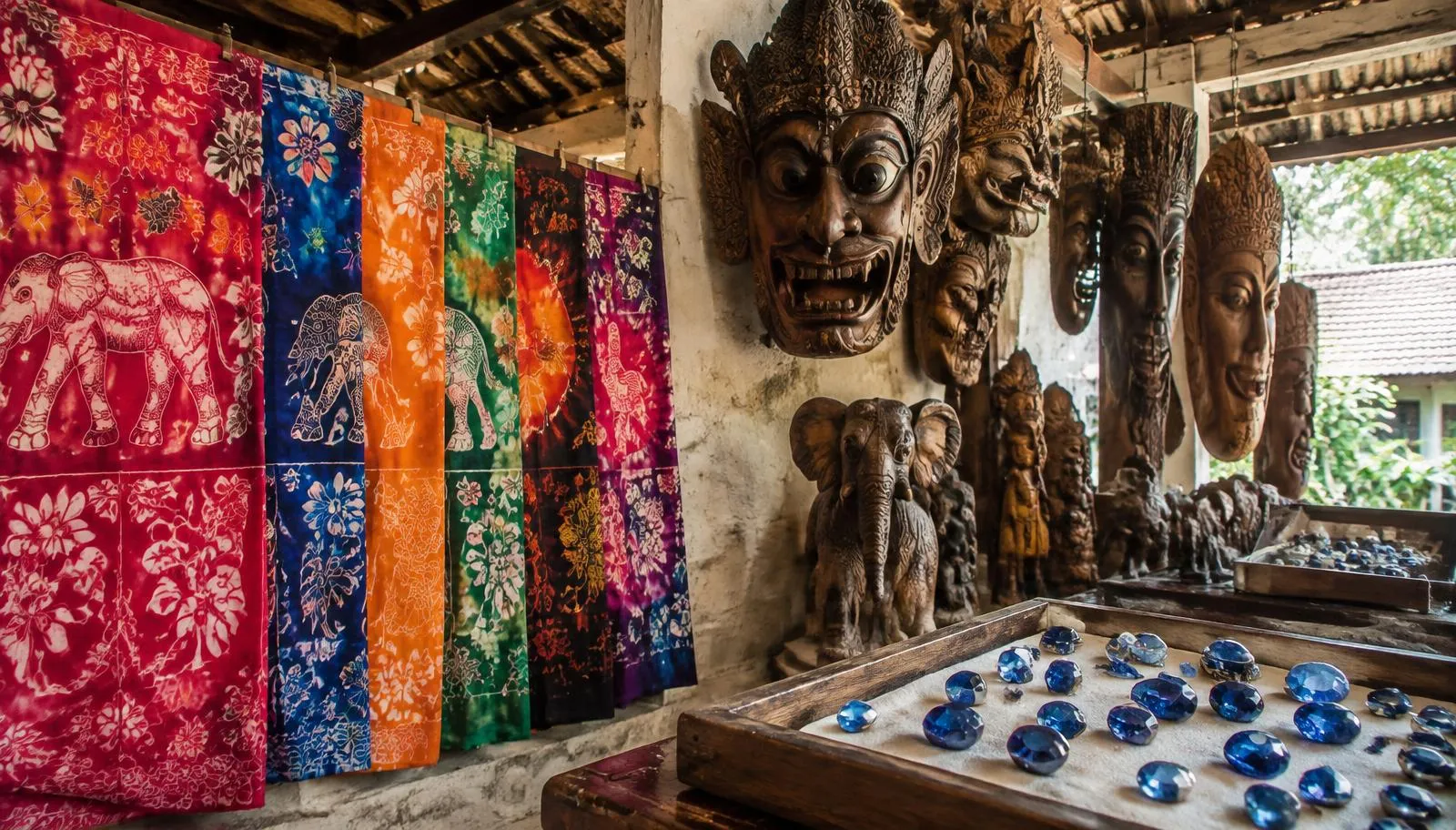
Batik, Gem Museum & Wood Carving Visit
Immerse yourself in Sri Lanka's legendary craft traditions with an artisan workshop tour featuring a gem museum visit, hand-drawn batik factories, and traditional wood carving ateliers. Travel in comfort with a dedicated private driver from Ashi Travels.
About this activity
Overview of the Sri Lanka Handicrafts and Gem Tour
Sri Lanka holds an ancient reputation as one of the world's most vibrant crossroads of artisan craftsmanship and natural mineral wealth. For millennia, travellers from ancient Rome, Arabia, Persia, and China sailed to this tropical island in search of rare treasures, earning it names such as Taprobane and Serendib. At the heart of this enduring legacy are three distinct artistic traditions: the extraction and lapidary of the Ceylon sapphire, the patient wax-resist textile art of the batik factory sri lanka, and the sculptural heritage of sri lankan wood carving. A dedicated craft and museum excursion brings these tactile, living traditions to life, allowing travellers to observe master artisans directly at work.
Unlike standard sightseeing stops that simply offer a retail showroom, a well-paced sri lanka handicrafts tour prioritises education, cultural preservation, and behind-the-scenes understanding. When you visit a reputable gem museum sri lanka, you are not merely admiring finished jewellery in display cases. Instead, you walk through recreated mining tunnels, observe the rough mineral specimens in their raw alluvial matrix, examine traditional hand tools alongside modern refractometers, and watch skilled lapidaries facet precious stones with incredible micro-precision. Pairing this with visits to traditional wood carving workshops and family-run batik ateliers creates an enriching, multifaceted journey into the island's material heritage.
Ashi Travels arranges private, tailor-made transport itineraries across Sri Lanka's key craft hubs, including Kandy, Ratnapura, and the scenic southern coastal belt around Galle and Ambalangoda. With a dedicated private driver and a comfortable air-conditioned car, van, or bus, you can explore these artisan workshops at your own pace without rigid group schedules, rushed demonstrations, or unexpected detours. All visits, route sequences, and timing details are customized directly through private WhatsApp consultation to ensure your travel day aligns perfectly with your holiday rhythm.
Why Explore Traditional Crafts and Gemstones in Sri Lanka
Experiencing Sri Lankan artisan traditions firsthand is fundamentally different from observing cultural objects behind glass in a foreign museum. Here, these techniques are living practices passed down through multiple generations of artisan families. A visit gives you direct access to the smells of melting beeswax, the rhythmic tapping of wood mallets against steel chisels, and the cool glow of rough mineral gravel emerging from basket filters.
First, Sri Lanka is globally unique in its gemological concentration. Over ninety percent of the island's landmass is underlain by gem-bearing metamorphic rock from the Precambrian era, making it one of the densest gem deposits on earth. Visiting a specialized gem museum gives you a foundational understanding of why this small island produces world-renowned Padparadscha sapphires, cornflower blue sapphires, star stones, cat's eyes, and alexandrites. You discover the geology of the gem pits, the ecological practices of sustainable alluvial mining, and the precise angles required to unlock fire and brilliance from a raw stone.
Second, the textile tradition of batik represents a fascinating blend of historical trade routes and local artistic innovation. While batik originally arrived on the island through ancient maritime links with the Indonesian archipelago and Dutch colonial trade, Sri Lankan artisans transformed the medium into a distinctly local visual language. Sri Lankan batik is known for bold, dramatic color palettes, intricate portrayals of Kandyan dancers, wildlife motifs of leopards and peacocks, and sophisticated contemporary wall hangings. Witnessing the painstaking process of multi-stage hot-wax painting and cold-water dyeing fosters deep appreciation for every single completed garment or wall piece.
Third, timber craftsmanship connects directly to Sri Lanka's religious and architectural history. From the intricate fourteenth-century wooden roof pillars of Embekke Devalaya near Kandy to the vibrant theatrical demon masks of the southern coastal communities, wood carving has shaped daily ritual and spiritual life for centuries. Watching an artisan turn a rough block of sustainably harvested timber into a delicate lotus bud or a dramatic Raksha mask reveals the deep connection between natural forest materials and Sri Lankan cultural expression.
Finally, choosing an educational tour provides an ethical window into artisan livelihoods. By taking time to observe the process, speak with craftspeople, and understand the hours required to produce handmade work, visitors develop a discerning eye that helps them recognize authentic quality, avoid mass-produced synthetic imports, and support local heritage industries responsibly.
Key Destinations: Where Crafts and Gems Flourish
Artisan crafts are woven across the entire country, but certain regional centres are celebrated for specific specialities. Your Ashi Travels private itinerary can focus on a single region or link several craft clusters together seamlessly during your wider holiday.
Kandy and the Central Highlands Kandy is universally recognized as the cultural heartland of Sri Lanka and remains the premier hub for traditional artisan guilds. Under the patronage of the ancient Kandyan kings, craft communities flourished in the surrounding villages, developing specialized skills in timber carving, brass casting, silver filigree, and gem cutting. Today, the hills around Kandy house some of the island's most established gem museum venues and lapidary training centres. The city is also home to historic batik ateliers where artists hand-paint textiles against the backdrop of lush highland greenery, as well as renowned wood carving complexes along the road to Peradeniya and the historical craft villages of Pilimathalawa and Embekke.
Ratnapura: The Legendary City of Gems Situated in the Sabaragamuwa Province, Ratnapura translates directly as the City of Gems. This is the undisputed epicenter of Sri Lanka's alluvial gem mining industry. Nestled between towering rainforest ridges, Ratnapura's riverbeds and agricultural valleys are dotted with traditional bamboo-timbered mine shafts called illama pits. A visit to Ratnapura offers an earthy, authentic perspective on gem extraction, with historic gem museums displaying extraordinary mineralogical specimens, local gem markets where rough stones change hands in open-air street squares, and deep insight into the daily lives of the miners who wash gem gravel in woven conical baskets.
The Southern Coast: Ambalangoda and Galle The southern maritime highway between Bentota, Ambalangoda, and Galle is famous for coastal crafts, particularly traditional mask carving and coastal batik studios. Ambalangoda is the world capital of Sri Lankan mask making, where carvers utilize light, porous kaduru wood to carve intricate masks used in Kolam folk theatre and ancient healing rituals known as sanni yakuma. Further down the coast, historic Galle Fort and its surrounding inland villages feature refined contemporary batik design houses, boutique jewellery studios, and antique timber restoration workshops that celebrate southern coastal aesthetics.
How to Get There and Approximate Travel Times
Because these craft centres are located in distinct geographic areas, having a dedicated private vehicle and driver makes exploring them straightforward, comfortable, and efficient. All journey times below are approximate estimates that vary with daily traffic flow, weather conditions, and precise starting points.
Travel Times to Kandy Craft Hubs - From Colombo City: Approximately 3 to 3.5 hours via the Central Expressway and A1 highway, covering roughly 115 kilometres. - From Bandaranaike International Airport (BIA), Katunayake: Approximately 2.5 to 3 hours via the expressway network. - From Galle and the South Coast: Approximately 4.5 to 5.5 hours via the Southern Expressway and inland connections. - From Sigiriya or Dambulla: Approximately 2.5 to 3 hours driving south along the scenic A9 arterial road.
Travel Times to Ratnapura Gem District - From Colombo City: Approximately 2.5 to 3 hours via the A4 High-Level Road or Southern Expressway interchange at Kaduwela, covering roughly 100 kilometres. - From Bandaranaike International Airport (BIA): Approximately 3 to 3.5 hours depending on suburban Colombo transit. - From Galle or South Coast Resorts: Approximately 2.5 to 3 hours heading inland via Matara or Kalutara bypass routes. - From Kandy: Approximately 3.5 to 4 hours navigating down through the scenic mountain passes of Gampola and Nawalapitiya.
Travel Times to Southern Coast Craft Centers (Ambalangoda and Galle) - From Colombo City: Approximately 1.5 to 2 hours via the Southern Expressway (E01). - From Bandaranaike International Airport (BIA): Approximately 2 to 2.5 hours via the Outer Circular Expressway connecting smoothly to the E01. - From Kandy: Approximately 4.5 to 5.5 hours combining highland highways with the coastal expressway.
With Ashi Travels, your private driver handles all road navigation, highway tolls, and parking logistics. You can relax in climate-controlled comfort, take photos of passing landscapes, and stop whenever you wish for fresh king coconut water or a scenic lookout.
Best Time and Seasons to Plan Your Visit
One of the greatest advantages of an artisan workshop and gem museum sri lanka itinerary is that it is fundamentally an all-weather, year-round experience. Because workshops, lapidaries, and museum galleries are sheltered, indoor spaces, craft visits serve as ideal activities during wet monsoon afternoons or high-noon heat.
However, seasonal factors can influence your broader travel itinerary and regional exploration:
West and South Coast Seasonality (November to April) If you are visiting batik studios and mask carving workshops in Ambalangoda, Galle, or Bentota, the dry months from November through April provide clear skies, calm seas, and optimal road conditions along the southern corridor. This period is ideal for pairing coastal craft workshops with beach stays, marine excursions, and historic walking tours of Galle Fort.
Central Highlands Seasonality (December to April and July to September) For visiting Kandy's craft villages and highland gem museums, December through April generally brings bright, crisp days with minimal rain, perfect for driving through the lush tea-clad hills. The secondary dry window between July and August is equally vibrant, coinciding with the world-famous Esala Perahera festival in Kandy, where elaborately carved timber, traditional silver work, and magnificent embroidered textiles are displayed in nightly royal processions.
Ratnapura and the Wet Season Considerations (May to October) Ratnapura sits within the wet southwestern climatic zone and receives abundant rainfall, particularly during the southwest monsoon between May and September. While indoor gem museums and cutting facilities operate continuously throughout the year, open-cast alluvial mining pits may pause operations during periods of intense torrential rain due to water levels in riverbeds. If your goal is to observe active pit mining in the fields outside Ratnapura, the drier months of January, February, and March offer the most consistent access.
Regardless of when you travel, seasons and workshop schedules can vary throughout the year. Ashi Travels confirms operating hours, local festival closures, and road conditions directly via WhatsApp prior to your journey.
Step-by-Step Experience: What to Expect at Each Stop
To help you visualize your cultural day, here is a detailed breakdown of what occurs during a comprehensive artisan workshop and museum route.
Part 1: The Batik Factory and Textile Demonstration Your artisan visit often begins at a peaceful, courtyard-style batik workshop surrounded by tropical garden foliage. Upon entering, the distinctive aroma of molten beeswax and paraffin wax greets you.
Step 1: Sketching and Design Conception. You watch master illustrators sketching elaborate patterns freehand onto pure, unbleached white cotton or fine silk using soft graphite pencils. The designs range from intricate geometric mandalas to fluid illustrations of indigenous wildlife, religious iconography, and contemporary abstract art.
Step 2: The Canting and Wax Application. Next, you observe the wax-application process. Artisans use a specialized copper pen known as a canting (or tjanting) alongside delicate horsehair brushes. Molten wax is kept at an exact temperature in heated metal basins. With a steady hand, the artisan applies the liquid wax along the sketched lines. The wax immediately penetrates the cloth fibres and solidifies, creating an impermeable barrier that blocks dye absorption.
Step 3: Immersion Dyeing. The fabric is immersed in cold dye vats. The uncovered cloth absorbs the pigment, while the waxed sections remain completely white. Sri Lankan batik is renowned for multi-colored layering; to achieve a five-color design, the fabric must be dried, re-waxed in selected areas, dyed in a darker shade, and dried again through five sequential cycles. The order of colors requires deep chemical knowledge, moving meticulously from the lightest shades like pale yellow to the deepest indigos and obsidian blacks.
Step 4: Boiling and Washing. Once dyeing is complete, the cloth is plunged into copper cauldrons of rolling boiling water. The heat melts away the wax, which floats to the surface and is skimmed off for recycling. As the wax lifts, the crisp, vibrant, multi-layered artwork is revealed. The cloth is washed in cold water, fixed to ensure colourfastness, and hung to dry in the tropical breeze. You have full freedom to inspect the finished textiles, examine the double-sided clarity of genuine batik, and ask questions about the natural and synthetic pigments used.
Part 2: The Heritage Wood Carving Workshop After the textile studio, your driver takes you to a traditional wood carving atelier. As you approach, the sweet scent of freshly planed teak, mahogany, and sandalwood fills the air, punctuated by the rhythmic percussion of wooden mallets.
Step 1: Selecting the Timber. An experienced woodturner or master carver explains the different characteristics of native Sri Lankan timbers. You will handle samples of heavy, water-resistant teak; dense, lustrous mahogany; rare, dark-grained ebony; and the remarkably lightweight, porous wood of the kaduru tree (Nux vomica), which grows wild along marshy riverbanks and provides the ideal medium for theatrical mask carving due to its soft, pliable grain.
Step 2: Rough Carving and Relief Sculpting. You observe craftsmen seated cross-legged on timber shavings, using flat gouges and curved chisels to block out the primary forms from raw wooden logs. Whether crafting a relief panel depicting historical Kandyan court scenes or shaping the snarling jaws of a traditional Naga Raksha (cobra mask), the artisan works with remarkable spatial awareness, shaping the wood without pre-drawn guides on the three-dimensional curves.
Step 3: Fine Detailing and Smoothing. Next comes the delicate phase of micro-detailing. With miniature chisels, carvers trace intricate feather patterns on bird wings, delicate floral scrollwork known as liya-wela, and expressive facial features. The piece is then sanded through progressive grits using dried leaves of the sandpaper tree (Ficus asperrima) or modern abrasives until the surface feels like polished marble.
Step 4: Traditional Finishing and Natural Pigments. In traditional mask studios, you will see artisans grinding organic mineral pigments and plant extracts to create authentic natural paints. Crushed sea shells provide chalky white, yellow orpiment creates warm gold, and ground cinnabar produces fiery red. These natural pigments are tempered with tree sap to create enduring, vibrant finishes that resist tropical humidity.
Part 3: The Gem Museum and Lapidary Demonstration The gemological portion of the tour provides a fascinating transition from organic forest crafts to deep-earth mineralogy.
Step 1: Geological Orientation and Mining Models. Upon entering the gem museum, an informative guide or documentary presentation introduces you to the island's unique geological formation. You view cross-section models of traditional illama mining pits, complete with timber-reinforced walls and bamboo water pumps. Historic mining tools, woven cane baskets (vattiya), and oil lamps used to test for underground oxygen levels illustrate the ingenuity of ancient miners.
Step 2: The Mineral Gallery and Rough Specimens. You are guided through display cases housing unworked mineral specimens still embedded in host rock. Here you will see raw corundum crystals, tourmalines, zircons, spinels, garnets, chrysoberyls, and topaz. Museum educators demonstrate how rough sapphires appear before treatment—often looking like dull, cloudy pebbles to the untrained eye.
Step 3: The Lapidary Studio (Cutting and Faceting). You step into the working lapidary room where professional stone cutters sit before spinning wheels. You observe the initial pre-forming stage, where raw stones are shaped using a diamond-impregnated disc. Then, the lapidary mounts the stone onto a dop stick using heated jeweller's wax and begins the exacting process of faceting. With meticulous hand-eye coordination, the cutter cuts dozens of precise geometric facets at calculated angles designed to maximize internal light refraction. You can peer through a jeweller's loupe or stereo microscope to inspect internal crystal inclusions, silk structures, and the absence of synthetic flaws.
Step 4: Gemological Testing and Grading. The museum educator explains the scientific testing methods used to certify authenticity. You will see refractometers measuring refractive index, polariscopes checking optical character, and hydrostatic balances determining specific gravity. The guide clearly explains how Sri Lankan Ceylon sapphires are classified, the distinction between unheated natural stones and thermally enhanced gems, and the criteria that international laboratories look for when issuing verification certificates.
Deep Dive: The Art of the Ceylon Sapphire and Gemology
No visit to a gem museum sri lanka is complete without appreciating the cultural and economic significance of the Ceylon sapphire. Renowned across global jewellery markets for its exceptional clarity, luminous transparency, and vibrant saturation, the blue corundum from Sri Lanka holds a special place in history. British royal heirlooms, medieval ecclesiastical rings, and legendary museum collections across Europe and America frequently feature central stones mined from the river gravels of Sabaragamuwa and the Central Highlands.
Corundum is composed of aluminium oxide, an extremely hard mineral rating a 9 on the Mohs hardness scale—second only to diamond. Pure corundum is completely colorless; the dazzling spectrum of sapphires occurs entirely through trace mineral impurities trapped inside the crystal lattice during formation billions of years ago. When titanium and iron combine in precise ratios, the stone displays its iconic cornflower or royal blue hue. When chromium enters the crystal matrix, it creates pink sapphires or deep red rubies. Iron alone yields sunny yellow or golden tones.
The holy grail of Sri Lankan gemology is the exceedingly rare Padparadscha sapphire. Derived from the Sanskrit-Sinhalese word for lotus blossom (padma ranga), this extraordinary gemstone showcases a delicate, luminous fusion of salmon-pink and sunset-orange simultaneously. Gemologists worldwide consider authentic natural Padparadschas from Sri Lanka to be among the most collectible treasures in the gem kingdom.
At a legitimate museum, you will also learn about asterism—the optical phenomenon that creates star sapphires and star rubies. When microscopic needle-like inclusions of rutile silk intersect at sixty-degree angles within a cabochon-cut stone, light reflects outward across the dome, creating a sharp, six-rayed star that moves smoothly across the surface as the stone turns in light. Understanding these mineral marvels turns your museum visit from a passive sightseeing stop into a rich masterclass in earth science.
Deep Dive: Wax, Dyes, and Cloth in Sri Lankan Batik
While industrial printing machines can produce millions of identical metres of patterned cloth per day, traditional batik remains an unapologetically manual art. In a world saturated with digital perfection, the subtle irregularities, crackle lines, and depth of true wax-resist batik celebrate human craftsmanship.
The crackle effect, often viewed as the signature characteristic of genuine batik, occurs organically during the dyeing process. As the waxed fabric is manipulated and dipped into cool dye baths, microscopic hairline fractures develop across the hardened wax matrix. Thin veins of liquid pigment seep into these fissures, creating delicate spider-web lines across the finished design. Skilled artisans master the balance between keeping designs crisp and allowing controlled crackle to impart textural richness.
Sri Lankan batik ateliers also distinguish themselves through their adventurous handling of color. Rather than relying solely on muted earth tones, local artists draw inspiration from the island's tropical flora and wildlife. You will encounter fabrics washed in vibrant turmeric golds, peacock teals, deep madder reds, and rich coconut-husk browns. When exploring a batik factory sri lanka, ask the artisans to show you the difference between double-sided wax penetration (where the design is equally crisp on both the front and reverse sides of the cloth) versus one-sided industrial printed imitations. That tactile examination is one of the greatest educational highlights of your excursion.
Deep Dive: Master Wood Carving and Traditional Mask Making
Sri Lankan wood carving spans two distinct artistic branches: architectural wood carving and ceremonial mask making. Both branches require deep knowledge of native forestry and traditional woodworking tools.
Architectural wood carving traces its pedigree back to the Gampola and Kandyan kingdom eras. Master carvers traditionally operated under royal decree, decorating temple pillars, door frames (doratupala), and palace ceilings with classic motifs. Key designs include the Hansa Puttuwa (intertwined sacred swans symbolizing discernment), the Makara (a mythical composite creature embodying aquatic and terrestrial power), and the Liya-vel (graceful floral scroll patterns). During a workshop visit, you will see how these historic temple motifs are adapted today into heirloom furniture, ornamental wall plaques, and musical instrument bodies.
Ceremonial mask carving, primarily rooted in the coastal belt of Ambalangoda and Mirissa, serves an entirely different spiritual purpose. Traditional masks belong to three primary genres: - Raksha Masks: Depicting mythical beings and guardian spirits, such as the Gurulu Raksha (eagle spirit symbolizing protection against harm) and the Naga Raksha (cobra spirit featuring writhing serpent crowns designed to banish negative energies). - Kolam Masks: Used in traditional comedic village folk theater, depicting characters from rural village life, historical kings, queens, soldiers, and village elders. - Sanni Masks: A series of eighteen specialized masks used in ancient healing ceremonies, each representing a specific physical or psychological ailment that shamans ritually pacified through theatrical performance.
Handling an authentic, seasoned kaduru mask allows you to appreciate how featherweight yet resilient this timber is, allowing dancers to wear them comfortably during vigorous night-long rituals.
Who This Tour Suits and Safety Considerations
This artisan and museum journey is versatile, educational, and universally accessible, making it an outstanding addition to many travel styles:
Families with Children and Teens Children and teenagers are captivated by the dynamic demonstrations. Watching hot wax bubble, seeing raw logs transformed into colorful monsters, and peering down microscopes at glittering gemstones provides a rich, tactile educational break from school textbooks. Workshops are welcoming and safe for curious younger travellers.
Culture, Heritage, and Art Enthusiasts Art historians, textile lovers, and interior design aficionados will find endless inspiration in the traditional patterns, natural materials, and guild histories. You have the time and space to discuss techniques at length with master artisans without feeling rushed.
Curious Shoppers and Collectors If you are searching for authentic souvenirs, custom-tailored linen and silk batik, certified Ceylon sapphires, or high-grade architectural carvings, visiting the actual workshops provides complete provenance, transparent explanations, and the ability to verify authenticity directly.
Accessibility and Safety Considerations Workshop tours are physically undemanding. Walking distances are minimal, and visits take place on level ground within sheltered pavilions. However, travellers should note a few environmental details: - Scent Sensitivity: Batik workshops involve hot melting wax (beeswax and paraffin) and chemical dye solutions. While spaces are open-sided and well-ventilated, individuals with severe respiratory sensitivities or asthma should be aware of warm wax vapours. - Wood Dust: Wood carving workshops contain fine timber sawdust. While demonstrations take place in open studios, those with dust allergies may appreciate having a light mask on hand. - Lapidary Lighting: Gem testing involves focused optical instruments, loupes, and bright LED illumination. If you have light sensitivity, take regular eye breaks during microscope viewings.
What to Wear and What to Bring
To ensure maximum comfort throughout your craft tour day, consider these simple packing recommendations:
- Clothing: Wear lightweight, breathable cotton or linen clothing suited for tropical temperatures. While there are no strict temple dress codes for craft workshops, modest casual wear (covering shoulders and knees) is respectful when interacting with artisans in traditional regional communities.
- Footwear: Comfortable slip-on shoes or sandals are ideal. You will be stepping in and out of workshops, and comfortable footwear makes moving between demonstration areas effortless.
- Eye Protection: Sunglasses for bright daylight outdoor walks between workshop pavilions.
- Note-Taking and Photography: A camera or smartphone with good macro capability is great for capturing close-up details of gemstone facets, wax canting lines, and timber chisel work. Always ask polite permission before taking close-up portraits of individual artisans.
- Cash and Payment Cards: While major gem centres and large craft ateliers accept international credit cards, smaller roadside artisans and family-run workshops prefer cash in Sri Lankan Rupees (LKR) for small purchases, refreshments, and tips.
- Hydration: Keep a reusable water bottle in your Ashi Travels vehicle; your driver can replenish chilled bottled water whenever needed.
Responsible, Ethical, and Sustainable Craft Tourism
Ashi Travels is dedicated to responsible tourism practices that respect local communities, preserve cultural integrity, and protect travelers from misleading sales tactics.
Zero Pressure Visits One common concern travellers have about artisan visits is aggressive sales pressure. Ashi Travels partners exclusively with reputable, transparent workshops and museum facilities that welcome visitors for educational appreciation. You are never obligated to make a purchase. Observing the demonstrations and learning about the techniques is entirely valuable in its own right.
Fair Artisan Support and Transparency When you do choose to purchase a souvenir—whether a hand-painted batik sarong, a carved kaduru mask, or a gemstone—supporting genuine craft studios ensures that your financial investment directly benefits the artisans, their families, and the continuation of these ancient guild skills. Reputable gem museums provide transparent documentation, internationally recognized gemological certificates, and fair trade practices.
Environmental Awareness in Gem Mining and Timber Harvesting Sri Lanka's gem mining industry is globally admired for strict environmental regulations compared to large-scale open-pit operations elsewhere. By law, alluvial mining shafts in Sri Lanka must be dug manually with minimal heavy machinery to prevent land degradation. Once mining is complete, operators are legally required to backfill the pits, restore topsoil, and replant agricultural vegetation. Similarly, ethical wood carving ateliers utilize sustainably harvested timber such as cultivated mahogany, plantation teak, and fast-regenerating kaduru, avoiding illegal logging of protected virgin rainforest species.
Combining Craft Workshops with Popular Sri Lankan Routes
Because craft workshops are located along major travel arteries, they integrate effortlessly into wider multi-day itineraries across the island:
The Cultural Triangle to Kandy Corridor If you are traveling south from Sigiriya or Dambulla toward Kandy, you can include spice gardens, the Matale batik belt, and wood carving workshops on the northern approach to the city. After checking into your Kandy hotel, you can visit the Temple of the Sacred Tooth Relic, stroll the Kandy Lake, and explore a premier highland gem museum the following morning.
Colombo to Galle Coastal Journey Traveling from Colombo to the southern beaches of Bentota, Hikkaduwa, or Galle along the coastal expressway or scenic seaside road allows easy stops at the Ambalangoda mask museum and coastal batik workshops. Combine your craft visits with a boat safari on the Madu Ganga wetland estuary or a late-afternoon stroll through historic Galle Fort.
The Sabaragamuwa Gem and Wildlife Circuit For adventure and wildlife travellers heading toward Udawalawe National Park or Sinharaja Rainforest, traveling through Ratnapura provides an exceptional cultural detour. Spend your morning exploring the gem pits and museum galleries of Ratnapura, enjoy an authentic rice and curry lunch, and arrive at your safari lodge or rainforest eco-resort in time for a sunset game drive.
How Ashi Travels Facilitates Your Craft Journey
Ashi Travels specializes in providing dedicated private vehicle transport with professional, knowledgeable English-speaking drivers across Sri Lanka. Here is how our service ensures a seamless, stress-free artisan tour:
- Dedicated Private Transport: Travel exclusively with your party in a clean, modern, fully air-conditioned vehicle matched to your group size—from comfortable sedans for couples to spacious vans for families and buses for travel groups.
- Flexible Door-to-Door Service: Your driver picks you up directly from your hotel lobby, cruise terminal, or airport arrival hall and drops you back at your door. You control the timing, with complete freedom to linger longer at a workshop or leave whenever you are ready.
- Curated Workshop Selections: Your driver guides you to authentic, verified workshops that focus on educational quality, safety, and cultural integrity, helping you avoid low-grade tourist traps or unsolicited sales detours.
- Effortless Route Navigation: Sri Lanka's mountain curves, city traffic, and rural roads require experienced handling. Your Ashi Travels driver navigates efficiently, selects the best expressway routes, and manages all parking arrangements.
- Personalized WhatsApp Booking: Planning your day is straightforward and direct. You can discuss your route preferences, ask questions, confirm approximate driving times, and finalize your vehicle booking directly via WhatsApp without rigid online forms or impersonal booking portals.
Practical Tips for an Unhurried and Rewarding Visit
To get the most value out of your craft tour, keep these practical pointers in mind:
- Pace Your Day: Attempting to visit three large craft centres, a gem museum, and multiple historical temples in a single afternoon can lead to sensory overload. We recommend pairing one gem museum with one or two artisan workshops per half-day to allow leisurely exploration.
- Ask Questions Freely: Artisans love sharing their craft. Ask the batik artist how long a complex wall hanging took to complete, or ask the wood carver how they determine the grain direction. These personal interactions often become the most memorable moments of the trip.
- Inspect Gem Certificates: If purchasing a precious gemstone, ensure you receive a verified certificate from a certified gemological laboratory stating the stone's identity, carat weight, cut, dimensions, and whether it is natural and unheated.
- Photography Courtesy: Most workshops happily welcome photography and video of demonstrations. However, some boutique batik design houses restrict photography of their newest proprietary fashion patterns to prevent design piracy. Look for posted notices or simply ask your guide.
- Support Traditional Masters: If an artisan spent significant time giving you a personalized, one-on-one demonstration, leaving a small gratuity (tip) in their workshop tip box or directly to the craftsperson is customary and deeply appreciated.
Frequently Asked Questions
What is included in a gem museum Sri Lanka visit? A typical gem museum visit includes a guided walk through geological exhibits explaining Sri Lanka's alluvial mineral formation, scale models of traditional mining pits, a display gallery of rough and cut gemstones, and a live demonstration of stone cutting and faceting by skilled lapidaries. Certified gemologists are on hand to explain gem testing, grading criteria, and certification procedures.
Are the batik and wood carving demonstrations free to watch? In most reputable workshops and museums, cultural demonstrations are offered free of charge as part of the facility's educational showcase. Certain specialized museums may have modest entry tickets. Because entrance policies, workshop seasons, and operating hours can change, Ashi Travels confirms all current details and fees directly through your WhatsApp consultation prior to travel.
How long does a full crafts tour take? A relaxed tour combining a batik factory, a wood carving workshop, and a gem museum typically takes around four to six hours, depending on your pace and lunch plans. If you are traveling between regions—such as driving from Colombo to Ratnapura or Kandy—it easily forms a comprehensive, rewarding full-day excursion of seven to nine hours including driving time.
Can Ashi Travels customize the tour stops based on my personal interests? Yes, absolutely. Every Ashi Travels itinerary is entirely private and customizable. If you are primarily interested in gemstones and want to visit multiple gem labs in Ratnapura or Kandy, or if you prefer to focus entirely on southern mask carving and textiles around Galle, your driver adjusts the route exactly to your personal preferences.
How do I know if a Ceylon sapphire I purchase is genuine? Reputable gem museums and authorized jewellery ateliers provide comprehensive laboratory testing certificates from independent, government-registered or international gemological laboratories. These certificates detail the exact carat weight, dimensions, refractive index, natural origin, and whether the sapphire has undergone heat treatment. Never purchase valuable stones from unverified street vendors without certified documentation.
Is it safe and comfortable for children to visit these workshops? Yes, children find these craft demonstrations fascinating and engaging. The visual contrast of hot wax, bright textile dyes, flying wood shavings, and sparkling gems makes it an entertaining family activity. Workshop spaces are open and sheltered, though children should be supervised around hot wax cauldrons, sharp woodworking chisels, and spinning lapidary wheels.
Can I purchase custom-tailored batik clothing or custom jewellery? Yes, many leading batik ateliers offer on-site tailoring services, allowing you to select your preferred fabric and have shirts, dresses, or sarongs fitted. Similarly, many gem museums feature custom jewellery studios where you can select a loose Ceylon sapphire and have it mounted in silver, yellow gold, white gold, or platinum by master goldsmiths.
What vehicle types does Ashi Travels provide for this excursion? Ashi Travels maintains a versatile fleet of modern, fully air-conditioned vehicles to match any party size. We provide comfortable sedans for solo travellers and couples, spacious minivans for families or small groups carrying luggage, and mini-coaches or full-size passenger buses for larger private groups. All vehicles include a professional, licensed private driver.
How do I book this tour with Ashi Travels? Booking is quick and simple via WhatsApp. You can message Ashi Travels directly to share your travel dates, pickup location, group size, and preferred craft interests. Our team will recommend the most scenic and efficient routing, provide vehicle options, and confirm all arrangements smoothly.
Schedule
- 1
08:30 AM - Hotel Pickup and Countryside Drive
Your private Ashi Travels driver meets you at your hotel lobby in an air-conditioned vehicle to begin your cultural discovery route.
- 1
09:30 AM - Traditional Batik Factory Experience
Arrive at a working batik atelier to watch artists sketch intricate motifs and apply molten beeswax before immersion in vibrant dye baths.
- 1
11:30 AM - Heritage Wood Carving Workshop
Step into a fragrant timber studio to see master carvers transform mahogany, teak, and kaduru wood into decorative panels and cultural masks.
- 1
01:00 PM - Authentic Sri Lankan Lunch Break
Pause at a handpicked local restaurant recommended by your driver for fresh rice and curry or regional specialties.
- 1
02:30 PM - Gem Museum and Lapidary Demonstration
Visit a certified gem museum and workshop to learn about alluvial mining, watch precision lapidaries, and view natural Ceylon sapphires.
- 1
04:30 PM - Relaxed Return Journey
Conclude your immersive craft tour with a scenic, smooth drive back to your hotel or onward travel base.