
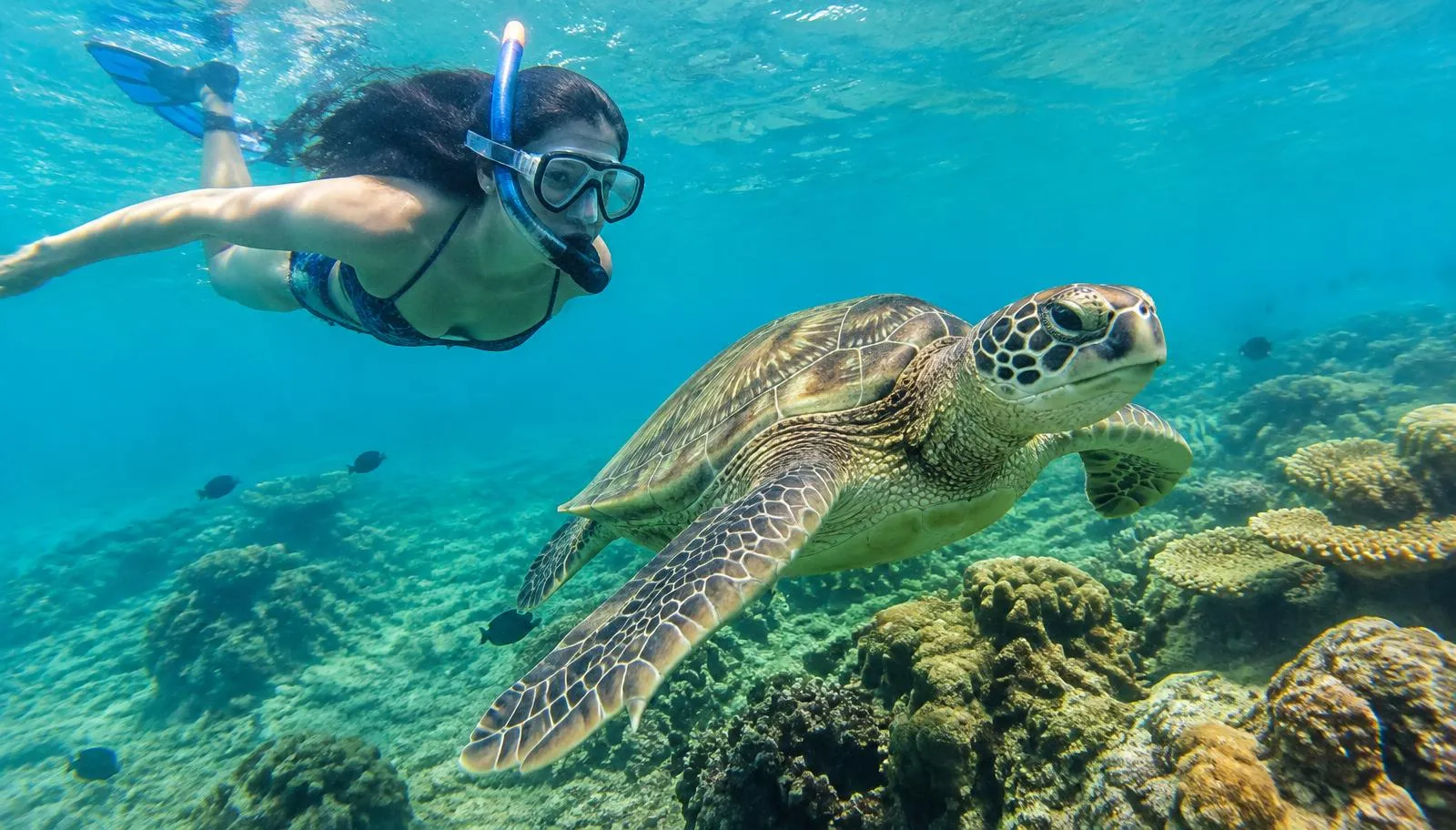
Hikkaduwa Turtle Snorkeling
Immerse yourself in the warm waters of Hikkaduwa to observe wild sea turtles feeding naturally along the reef. Ashi Travels provides reliable private transport and helps arrange your snorkeling trip via WhatsApp.
About this activity
Overview of Turtle Snorkeling in Hikkaduwa
Sri Lanka is renowned across the globe as one of the premier marine wildlife destinations in the Indian Ocean. While the deep offshore waters draw visitors for blue whales and sperm whales, the warm, sheltered fringing reefs along the southern coastline provide an intimate setting for coastal marine encounters. Among these coastal experiences, snorkeling with turtles Sri Lanka holds a special place, particularly in the bustling resort town of Hikkaduwa.
Hikkaduwa is located in the Galle District of the Southern Province. Long celebrated for its golden beaches, surf breaks, and colorful marine life, Hikkaduwa features a distinct reef system that creates a calm, shallow lagoon right off the main shoreline. This unique topography allows wild sea turtles, primarily large green turtles (Chelonia mydas), to swim directly into the shallows where sea grasses and marine algae flourish. Visitors do not need to take long, rough offshore boat journeys to see them; in Hikkaduwa, these graceful reptiles often glide within wading distance of the sand.
While turtle sightings in the wild can never be fully guaranteed, the resident green turtles in Hikkaduwa have frequented these shallows for decades, making this location one of the most reliable spots on the island for close-up viewing. Whether you are an experienced free diver, a casual snorkeler, or a family traveling with young children, the calm lagoon provides a rare opportunity to observe sea turtles in their natural habitat. Ashi Travels provides dedicated private vehicle transport with experienced local drivers, ensuring your journey to Hikkaduwa is comfortable, flexible, and seamlessly arranged through our WhatsApp booking channel.
Why Snorkel with Sea Turtles in Sri Lanka
Sri Lanka's coastal waters are home to five of the world's seven species of sea turtles: the green turtle, the olive ridley, the hawksbill, the loggerhead, and the massive leatherback turtle. While several species nest on the island's southern and eastern beaches under cover of darkness, the green turtle is the species most frequently seen feeding along the inshore reef flats during daylight hours.
Swimming alongside a mature sea turtle is a calming and awe-inspiring experience. These creatures can grow over a meter in shell length and weigh more than one hundred and fifty kilograms. In the water, their ponderous land movements give way to effortless grace as their paddle-like flippers propel them through the gentle swells. Snorkeling with turtles Sri Lanka allows you to observe their natural behaviors: surfacing with a gentle exhale to breathe air, descending slowly to scrape algae off submerged rocks, or resting quietly on the sandy seabed.
Unlike commercial oceanariums or captive enclosures, encountering wild turtles in the open sea allows travelers to appreciate marine life as it should be seen. It fosters a genuine understanding of ocean conservation and the critical need to preserve coral reef ecosystems. By choosing responsible viewing methods, your visit supports the local coastal economy and reinforces the community's commitment to protecting these endangered animals.
Location and Getting There by Private Vehicle
Hikkaduwa sits directly along Sri Lanka's southwestern coastline, approximately ninety-eight kilometers south of Colombo. The town is connected by both the scenic coastal A2 highway and the modern Southern Expressway (E01), making it easily accessible from nearly any base in western or southern Sri Lanka.
Reaching Hikkaduwa in a private car, passenger van, or mini-coach from Ashi Travels eliminates the stress of navigating crowded public buses or rigid train timetables. Having your own dedicated vehicle and driver means you can travel at your preferred time, leave your dry clothes and valuables safely locked in the vehicle while you swim, and make spontaneous detours along the scenic coast.
Travel times can vary depending on your starting location, time of departure, weather conditions, and regional traffic patterns:
- From Colombo City: Traveling via the Southern Expressway typically takes around one and a half to two hours, depending on city exit traffic. Leaving early in the morning allows you to arrive before the midday sun and peak beach crowds.
- From Bandaranaike International Airport (CMB) in Katunayake: The expressway bypass around Colombo allows for a direct trip of roughly two to two and a half hours, making Hikkaduwa a convenient first stop on a southern Sri Lanka holiday.
- From Galle Fort: Galle is just twenty to thirty minutes south of Hikkaduwa along the coastal road, making a snorkeling excursion an easy morning or afternoon trip for those staying in the historic fortress town.
- From Bentota or Beruwala: A leisurely thirty to forty-five minute drive south down the coastal corridor brings you straight to Hikkaduwa's coral sanctuary.
- From Mirissa or Weligama: Driving north via the expressway or coastal highway usually takes between forty-five minutes and one hour and fifteen minutes.
- From Kandy: Coming from the central highlands requires descending toward the expressway network, typically taking between four and a half to five and a half hours. Many guests choose to combine this journey with an overnight stay on the coast.
Your Ashi Travels driver will pick you up directly from your hotel entrance, handle luggage and parking, and remain on standby at the beach until you are ready to move on.
Best Season and Ocean Conditions
Sri Lanka is influenced by two distinct monsoon cycles, which dictate sea conditions on opposite sides of the island throughout the year. The southern and southwestern coasts, including Hikkaduwa, experience their prime conditions during the dry southwest season.
The Peak Snorkeling Season (November to April) The best time for hikkaduwa turtle snorkeling runs from November through April. During these months, the southwest monsoon recedes, giving way to calm seas, minimal rainfall, and excellent underwater visibility that often ranges from five to fifteen meters. The waters inside the reef lagoon are gentle and placid, creating ideal conditions for swimmers of all ability levels, including children and novice snorkelers.
The Off-Peak and Monsoon Period (May to October) From May to October, the southwest monsoon brings stronger winds, increased swell, and intermittent heavy rains to the southern coast. During this period, the open ocean beyond the reef becomes rough, and longshore currents can create choppy water and reduced visibility inside the lagoon. While sea turtles remain in the area year-round, swimming conditions may be less pleasant, and local authorities or beach operators may advise against entering the water on days with large surf. If you visit during these months, our team can check real-time sea conditions via WhatsApp and help you assess whether a visit on a particular morning is recommended.
Time of Day Regardless of the month, early mornings between 7:30 AM and 10:30 AM generally offer the best visibility, calmer winds, and fewer people on the beach. Sea turtles are actively foraging during these cooler morning hours before the midday sun warms the shallows.
Step-by-Step Experience: What to Expect on the Day
To help you visualize your trip, here is a detailed walkthrough of how a typical turtle snorkeling day unfolds when traveling with Ashi Travels:
1. Morning Hotel Pickup Your driver arrives promptly at your chosen pickup location in a clean, fully air-conditioned vehicle matched to your group size. You can relax, listen to music, or take in views of coastal coconut groves and fishing villages along the route.
2. Arrival and Beach Briefing Upon reaching Hikkaduwa, your driver parks in a secure area close to the beach access point. Your driver will walk with you to introduce you to the local beach area, point out safe entry paths, and help you locate reputable local gear rental kiosks if you need a mask, snorkel, or fins. You will receive an orientation regarding the reef layout and safe swimming zones.
3. Entering the Coral Lagoon The entry into the water is straightforward and directly off the sandy beach. There are no steep cliffs or difficult climbs. The sandy bottom gently slopes into the water, with the reef crest sitting roughly fifty to one hundred meters offshore, creating a natural breakwater that dampens the open ocean waves.
4. Meeting the Turtles As you wade into waist-to-chest-deep water, keep your eyes on the patches of seagrass and rocky reef substrate. In Hikkaduwa, it is common to spot sea turtles grazing quietly in water that is only one to two meters deep. Put on your mask, ease your face into the water, and watch them move with slow, deliberate strokes. You will see them nip at the green algae coating the rocks, effortlessly lifting their heads above the surface every few minutes for a breath of air.
5. Snorkeling the Coral Gardens After spending time with the turtles, you can swim slightly further along the lagoon to explore the hikkaduwa coral reef snorkeling area. Here, schools of vibrant tropical fish weave through coral heads. Look for colorful parrotfish scraping rock surfaces, energetic damselfish defending their small territories, and occasional blue-spotted rays gliding across sandy patches.
6. Rinsing Off and Refreshing After one to two hours in the water, return to the beach. Hikkaduwa offers numerous casual beachfront cafes where you can use freshwater showers, change into dry clothes, and enjoy fresh coconut water or a leisurely lunch with uninterrupted ocean views.
7. Continuing Your Journey When you are finished, your driver is waiting right where you left them, ready to take you back to your hotel or drive you to your next planned destination along the coast.
The Coral Reef and Marine Life of Hikkaduwa
Hikkaduwa is home to the Hikkaduwa National Park, one of only two marine national parks in Sri Lanka. Gazetted to protect the complex fringing coral reef, this marine reserve encompasses roughly one hundred hectares of ocean habitat.
The reef structure consists primarily of hard corals such as staghorn coral (Acropora), brain coral (Faviidae), and table coral, alongside various species of soft corals and encrusting sea sponges. While historical coral bleaching events linked to global climate fluctuations and localized human impacts have affected parts of the reef, active natural regeneration and conservation efforts continue to sustain diverse marine communities.
Beyond sea turtles hikkaduwa, snorkelers regularly encounter a wide array of marine species, including:
- Parrotfish: Distinctive for their bright teal, pink, and yellow coloration and fused bird-like beaks used to feed on algae.
- Butterflyfish and Angelfish: Graceful, disk-shaped reef dwellers sporting striking vertical striping and bright yellow patterns.
- Moorish Idols: Iconic Indo-Pacific reef fish with long trailing dorsal fins and bold black, yellow, and white bands.
- Sergeant Majors and Damselfish: Small, spirited fish that congregate in large schools around rocky crevices.
- Moray Eels: Often seen with their heads peering out from protected cavities within the coral limestone.
- Pufferfish and Porcupinefish: Slow-swimming inhabitants with large, curious eyes that frequent the reef edges.
- Invertebrates: Sea urchins, giant clams embedded in dead coral structures, sea cucumbers, and small hermit crabs.
Exploring this underwater landscape provides an engaging natural history lesson for all ages, highlighting the delicate ecological balance that keeps coastal Sri Lanka vibrant.
Who This Activity Suits and Safety Guidelines
Snorkeling with turtles in Hikkaduwa is accessible to a broad spectrum of travelers, but keeping basic ocean safety principles in mind ensures an enjoyable and risk-free outing.
Suitable For - Families with Children: The presence of shallow, sandy-bottomed water right at the water's edge allows children who can swim to see turtles without going into deep water. Life jackets are readily available for rent on the beach for added security. - Couples and Solo Travelers: A relaxing, low-intensity activity that fits easily into any beach holiday itinerary. - Beginner Snorkelers: Because you can enter directly from the sand without boarding small rocking boats, it serves as a gentle introduction to marine snorkeling. - Non-Swimmers: Non-swimmers can still observe turtles from knee-to-waist-deep water or opt for a local glass-bottom boat excursion across the reef lagoon.
Safety Considerations - Ocean Currents: Even inside a reef lagoon, water flows with tidal movements. Always observe the water before entering, watch for red warning flags posted by beach lifeguards, and avoid swimming near narrow reef channels where water funnels back out to the open sea. - Sea Urchins and Coral Cuts: Live coral and limestone rocks are sharp. Never stand, sit, or step on coral formations. Not only does stepping on coral kill fragile polyps that take decades to grow, but coral scrapes can easily become infected in tropical waters. Wear water shoes or short reef booties if you plan on wading. - Sun Exposure: The equatorial sun in Sri Lanka is intense, and the reflective surface of the ocean magnifies UV radiation. It is easy to get sunburned while snorkeling without realizing it. Wear a UV-protective rash guard or swim shirt and apply broad-spectrum sun protection. - Hydration: Swimming in warm saltwater dehydrates the body quickly. Keep plenty of bottled drinking water in your private vehicle, which your Ashi Travels driver can store in a cool compartment.
What to Wear and What to Bring
Coming prepared with the right clothing and accessories will make your snorkeling excursion comfortable and stress-free. Here is a recommended packing checklist:
What to Wear - Swimsuit or Swim Trunks: Put on your swimming attire beneath your street clothes before leaving your hotel to make your beach arrival smooth. - Rash Guard or UV Swim Shirt: A long-sleeved rash guard protects your back, neck, and shoulders from sunburn and reduces the need for heavy sunscreen application in delicate marine zones. - Water Shoes or Neoprene Booties: Useful for walking over coarse sand or pebble patches near the water line, though fins should be used once swimming.
What to Pack in Your Day Bag - Microfiber or Quick-Dry Towels: Keep one towel for the beach and another dry towel stored in the car for after you shower. - Change of Dry Clothes: Comfortable, lightweight cotton clothing to wear after your swim. - High-Quality Mask and Snorkel: While gear can be rented locally on Hikkaduwa beach, bringing your own well-fitting mask guarantees comfort and prevents leaks. - Snorkel Fins: Short travel fins provide easy maneuverability inside the lagoon without accidentally kicking the reef. - Waterproof Dry Bag: Keeps your mobile phone, wallet, and room key dry while walking on the shore. - Underwater Camera or Waterproof Phone Housing: Ideal for capturing images and video clips of swimming turtles and fish. - Reef-Safe Mineral Sunscreen: Look for mineral formulas containing non-nano zinc oxide or titanium dioxide that do not contain oxybenzone or octinoxate. - Wide-Brimmed Hat and Polarized Sunglasses: Essential protection against glare while walking the shoreline. - Cash in Sri Lankan Rupees (LKR): Small beachside rentals, coconut vendors, and cafes may not accept foreign cards; having local currency on hand is practical.
Because you are traveling with Ashi Travels, you can leave bulkier items, dry changes of clothes, and shopping bags safely locked inside your private vehicle under your driver's care while you enjoy the ocean.
Responsible and Ethical Turtle Encounters
As tourism has grown along Sri Lanka's coast, maintaining ethical standards during wildlife interactions has become paramount. Sea turtles are protected under Sri Lankan law through the Fauna and Flora Protection Ordinance, making it illegal to harm, capture, harass, or disturb them.
To ensure your encounter is respectful and does not harm the marine animals you have come to admire, please adhere strictly to these guidelines:
1. Maintain a Respectful Distance Never chase, corner, or surround a sea turtle. Keep a distance of at least two to three meters at all times. Allow the animal space to swim freely in any direction. If a turtle swims directly toward you, gently back away or float calmly without making sudden thrashing movements.
2. Never Touch or Ride Turtles Touching a sea turtle can cause significant stress to the animal and strip away protective natural mucus layers from their shells and skin, leaving them vulnerable to bacterial infections. Grabbing, riding, or holding down a turtle to pose for photos is completely unacceptable and harmful. Admire their natural beauty with your eyes and cameras only.
3. Do Not Feed the Turtles In some beach areas, local beach touts may offer seaweed or other food to tourists to hand-feed turtles for photographs. We strongly discourage this practice. Artificial feeding alters natural foraging behaviors, makes turtles dependent on humans, and can lead to accidental bites or nutritional imbalances. Sea turtles in Hikkaduwa have abundant natural algae and seagrass growing on the reef; they do not need human feeding.
4. Give Turtles Room to Breathe Sea turtles are reptiles with lungs and must surface periodically to breathe fresh air. Never hover directly above a feeding turtle or block its vertical path to the surface. If a turtle feels trapped underwater, it can panic and suffer oxygen deprivation.
5. Use Reef-Safe Sunscreen Chemical sunscreen components like oxybenzone, octinoxate, and octocrylene are scientifically proven to cause coral bleaching, damage coral DNA, and harm marine organisms even in minuscule concentrations. Choose mineral-based, reef-safe sunscreens, or rely primarily on UV swim shirts to protect your skin.
6. Avoid Plastic Waste Discarded plastic bags, wrappers, and water bottles are among the greatest threats to sea turtles worldwide, as turtles frequently mistake floating plastic bags for jellyfish and ingest them, often with fatal results. Always dispose of your rubbish in designated bins or pack it out with you in your vehicle.
Combining Your Snorkeling Trip with Nearby Attractions
A trip to Hikkaduwa for turtle snorkeling rarely takes an entire day on its own. With your private vehicle and driver from Ashi Travels, you can easily combine your morning ocean session with other renowned cultural, historical, and nature attractions across the southern province.
Galle Dutch Fort Located just twenty to thirty minutes south of Hikkaduwa, Galle Fort is a UNESCO World Heritage site featuring cobblestone streets, colonial Dutch and British architecture, atmospheric boutique shops, art galleries, and historic ramparts overlooking the ocean. After your morning swim, Galle Fort is an exceptional place for an afternoon stroll and a fine dining lunch.
Madu River Mangrove Safari in Balapitiya Situated approximately twenty minutes north of Hikkaduwa, the Madu Ganga wetland is a complex coastal mangrove estuary dotted with sixty-four islands. A motorized boat safari through the tranquil mangrove tunnels offers sightings of water monitors, kingfishers, cormorants, and monkeys, along with stops at Cinnamon Island to see traditional cinnamon peeling.
Traditional Mask Museum and Workshops in Ambalangoda Ambalangoda, located just north of Hikkaduwa, is the historical heart of Sri Lanka's traditional woodcarving and devil-mask culture. Visiting a local family-run mask museum allows you to learn how intricate Kolam and Sanni masks are hand-carved from soft kaduru wood and painted using natural mineral dyes.
Kosgoda Turtle Conservation Projects For visitors interested in the land-based conservation of nesting turtles, several community-supported turtle hatcheries operate along the Kosgoda and Bentota coastline. These centers collect eggs laid on vulnerable public beaches, protect them in enclosed sand incubators until they hatch, and release baby turtles into the ocean after dusk to safeguard them from predators and poachers.
Moonstone Mines in Meetiyagoda Just ten minutes inland from Hikkaduwa lies Meetiyagoda, one of the few places on Earth where rare, shimmering blue moonstones are mined from deep kaolin clay pits. You can take a brief guided tour of a traditional mine shaft and observe local gem cutters shaping and polishing these semi-precious stones.
Talk to Ashi Travels when planning your booking on WhatsApp to create a custom itinerary that links your snorkeling session with any of these surrounding experiences.
Why Choose Ashi Travels for Your Coastal Journey
Navigating foreign roads, coordinating regional transport, and negotiating with street taxi drivers can take time away from enjoying your holiday. Ashi Travels provides a reliable, high-standard private vehicle service tailored to international travelers, couples, families, and tour groups.
Dedicated Fleet Options Whether you are traveling as a solo adventurer, a couple seeking a comfortable sedan, a family requiring a spacious passenger van with child seats, or a larger private group needing an air-conditioned mini-coach, Ashi Travels provides clean, well-maintained vehicles with ample luggage capacity.
Experienced, Courteous Drivers Our drivers are experienced professionals who understand Sri Lanka's road networks, highway systems, and regional weather patterns. They serve as friendly travel companions who prioritize your safety, respect your schedule, and provide valuable local context without being intrusive.
Complete Schedule Flexibility When you book private transport, you set the pace. If you wish to spend an extra hour snorkeling, stop for fresh king coconuts on the roadside, or take photos at a coastal viewpoint, your driver waits patiently until you are ready to continue.
Transparent Coordination via WhatsApp At Ashi Travels, we handle all inquiries and booking confirmations directly through WhatsApp. You communicate directly with our team in real time to ask questions, verify travel times, adjust pickup locations, and finalize your travel arrangements without cumbersome forms or hidden booking platform surcharges.
Responsible Coordination Please note that Ashi Travels specializes in private transport and travel coordination. While we provide the vehicle, driver, and assistance with arranging activities on the ground, we do not operate our own dive centers or snorkeling boats directly. We connect you with trusted on-site providers while ensuring your land transport remains smooth, punctual, and safe.
Practical Tips for an Effortless Day Trip
To make sure your turtle snorkeling excursion in Hikkaduwa runs as smoothly as possible, keep these practical pointers in mind:
- Check Morning Tides: Water visibility is often clearer around low tide when there is less sediment stirred up by large waves. You can ask your driver or consult tide tables before setting off.
- Bring Cash for Rentals and Small Purchases: While your transport is arranged in advance, small incidental expenses on the beach—such as hiring a mask and snorkel set, renting a beach lounger, or paying for a fresh coconut—are strictly cash-only transactions.
- Secure Valuables in the Vehicle: Avoid leaving mobile phones, passports, or jewelry unattended on the beach while you are in the water. Leave unnecessary valuables in your hotel safe or safely locked in your private vehicle with your Ashi Travels driver.
- Rinse Saltwater Thoroughly: After swimming, rinse off saltwater promptly at the beachside freshwater showers to prevent skin irritation before traveling to your next destination in the air-conditioned vehicle.
- Respect Local Beach Etiquette: While swimwear is expected and welcomed directly on the sand and in the water, modest casual attire (covering shoulders and knees) is appreciated when walking through town streets, shops, or local village restaurants.
Frequently Asked Questions About Snorkeling with Turtles in Sri Lanka
Can you see sea turtles in Hikkaduwa year-round? Yes, green sea turtles reside along the Hikkaduwa reef year-round because the shallow lagoon provides a steady food source of algae and seagrass. However, sea conditions and water clarity are vastly superior during the dry season from November to April. During the monsoon months between May and October, turtles are still present, but larger ocean swells and poorer visibility can make snorkeling challenging or uncomfortable. Contact Ashi Travels on WhatsApp to check recent coastal conditions before you travel.
Are the sea turtles in Hikkaduwa wild or captive? The sea turtles in Hikkaduwa are completely wild animals living freely in the Indian Ocean. They are not held in tanks, pens, or enclosed lagoons. They choose to visit the shallow reef flat near the shore because it offers easy access to feeding grounds on the rocks. Because they are wild, they are free to come and go as they please, and encounters depend on natural behaviors.
Is snorkeling with turtles safe for children and beginners? Yes, Hikkaduwa is one of the safest places in Sri Lanka for beginners and children to see wild sea turtles. Because the turtles frequently feed in waist-deep water near the beach, swimmers do not need to plunge into deep or turbulent water. Life vests can be rented on the beach for inexperienced swimmers. However, children should always be supervised by a competent adult swimmer, as ocean currents can shift with the tide.
How much does it cost to snorkel with turtles in Hikkaduwa? Ashi Travels provides your private vehicle, driver, and door-to-door transport at transparent rates agreed upon in advance. Beach access in Hikkaduwa is public and free of charge. Incidental costs on the beach—such as renting a mask, snorkel, and fins, or hiring an optional local guide or glass-bottom boat—vary depending on the season and specific gear provider. Because prices can fluctuate, we recommend confirming current transport and activity details with Ashi Travels directly on WhatsApp.
What species of sea turtles can I see in Hikkaduwa? The overwhelming majority of turtles seen feeding in the Hikkaduwa shallows are green sea turtles (Chelonia mydas), recognizable by their smooth, rounded shells and herbivorous feeding habits. Occasionally, visitors may also spot a hawksbill turtle (Eretmochelys imbricata), known for its narrow pointed beak and overlapping shell plates, foraging near the outer reef edge.
Do I need to book a boat to see the turtles? In Hikkaduwa, you do not necessarily need a boat to see the turtles. The feeding zone is located immediately off the beach, meaning you can walk directly from the dry sand into the water and start snorkeling. However, if you have non-swimmers, seniors, or small children in your family group, hiring a traditional glass-bottom boat on the beach allows everyone to view the turtles and coral gardens without getting wet.
Can I touch or feed the turtles while snorkeling? No, you should never touch, hold, chase, or feed the turtles. Sea turtles are protected under Sri Lankan wildlife legislation, and physical contact causes them stress and can transmit harmful bacteria. Feeding turtles disrupts their natural diets and behavior. Maintain a respectful distance of two to three meters and observe them quietly as they swim and graze on the seabed.
How far is Hikkaduwa from Galle Fort? Hikkaduwa is located approximately twenty kilometers north of Galle Fort. By private vehicle with Ashi Travels, the drive typically takes between twenty and thirty minutes along the scenic coastal road, depending on local traffic. This close proximity makes combining turtle snorkeling in the morning with an afternoon exploring Galle Fort one of our most popular day trip itineraries.
How do I book a private day tour with Ashi Travels? Booking your private transport with Ashi Travels is simple and convenient. Send a message to our team via WhatsApp with your preferred travel date, starting pickup address, number of passengers, and any other sights you wish to see along the coast. Our team will promptly confirm vehicle availability, assist with timing recommendations, and provide a clear quote for your custom private journey.
Schedule
- 1
07:00 AM - Hotel Pickup and Coastal Drive
Your private Ashi Travels driver meets you at your hotel lobby in Colombo, Bentota, Galle, or surrounding towns in an air-conditioned car, van, or bus. Relax as you travel smoothly along the coastal road or Southern Expressway toward Hikkaduwa.
- 1
08:30 AM - Arrival at Hikkaduwa Beach and Reef Briefing
Arrive at the protected bay area in Hikkaduwa where local beach coordinators and snorkel guides operate. Your driver helps you connect with local gear providers and points out the safest entry points and lagoon conditions.
- 1
09:00 AM - Snorkeling with Sea Turtles in the Lagoon
Enter the calm nearshore waters to observe resident green sea turtles grazing on seagrass and sea algae. Swim gently alongside these ancient marine creatures while maintaining a respectful distance.
- 1
10:30 AM - Exploring the Hikkaduwa Coral Reef
Venture slightly farther out toward the coral clusters to view damselfish, parrotfish, butterflyfish, and living coral formations. You can snorkel independently or take an optional glass-bottom boat arranged on the beach.
- 1
12:00 PM - Fresh Seafood or Local Lunch by the Shore
Dry off, change into comfortable clothes, and relax at one of Hikkaduwa's beachfront cafes overlooking the ocean. Savor fresh tropical juices, authentic rice and curry, or freshly prepared local seafood dishes.
- 1
01:30 PM - Optional Afternoon Exploration
Choose to explore nearby coastal highlights such as the historic Galle Fort, the tranquil Madu River mangrove estuary, or a traditional mask carving workshop in Ambalangoda with your private driver.
- 1
04:30 PM - Return Journey to Your Hotel
Sit back and unwind in your private air-conditioned vehicle as your driver handles the coastal traffic. Arrive safely back at your hotel accommodation in the late afternoon or early evening.