
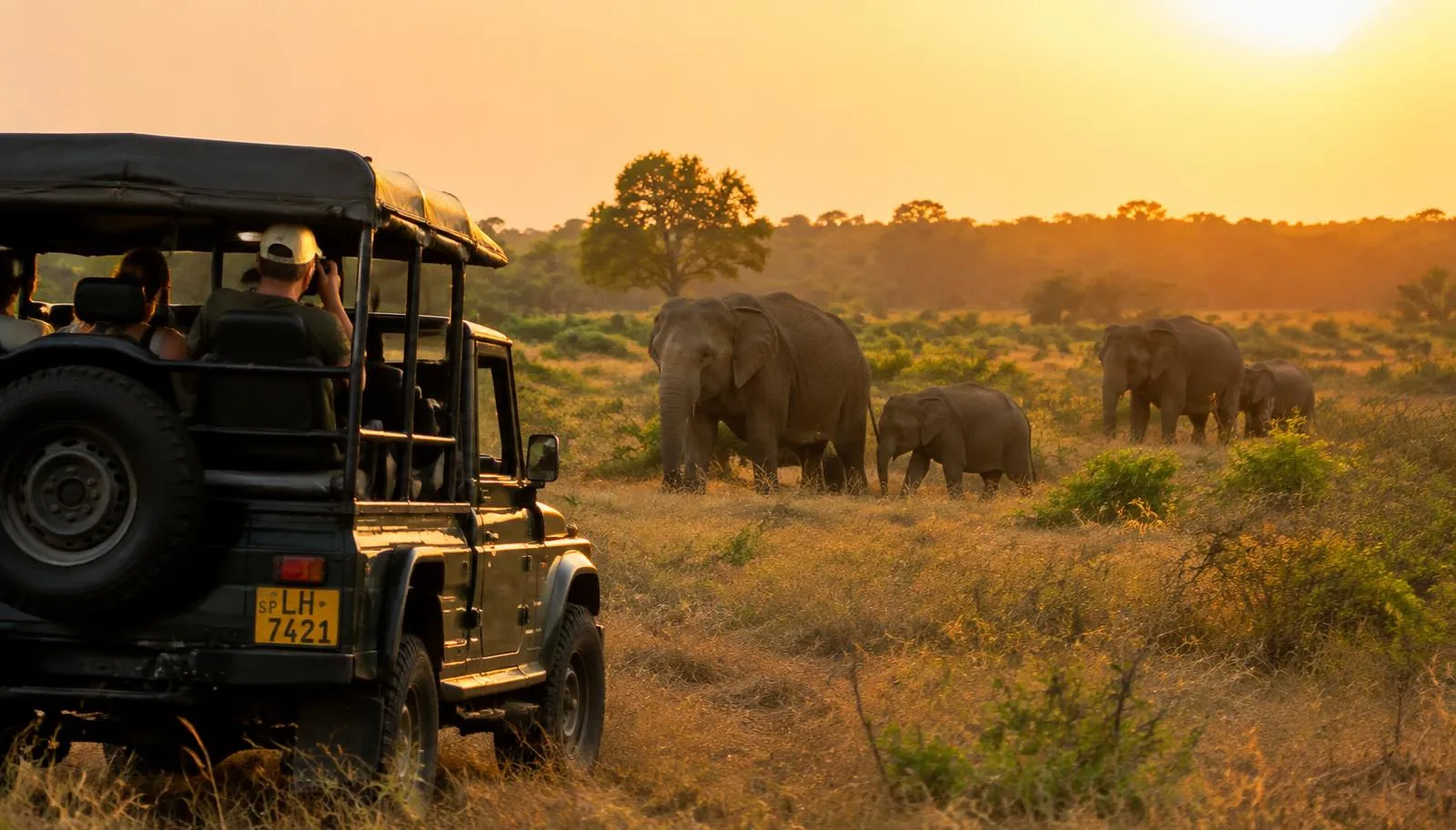
Sri Lanka Wild Animal Safari (Yala, Udawalawe, Minneriya)
Experience the premier wildlife destinations of Sri Lanka with private transfers to Yala, Udawalawe, or Minneriya, coordinated with local safari jeeps for an unforgettable encounter with elephants, leopards, and diverse birdlife.
About this activity
Overview of Sri Lanka Safari Adventures
Sri Lanka is widely recognised as one of the most biodiverse island nations on the planet. Despite its relatively compact land area, the country protects an extraordinary range of natural habitats, from arid thorn scrub and dry deciduous forests to extensive floodplains and lush wetlands. Within these protected territories live healthy populations of iconic large mammals, including wild Asian elephants, leopards, and sloth bears, as well as an incredible assortment of birds, reptiles, and amphibians. For international travellers seeking an authentic wildlife experience, taking a sri lanka safari offers the chance to immerse oneself in raw, untamed nature while maintaining high standards of comfort and travel convenience.
A successful wildlife safari in Sri Lanka hinges on choosing the right national park for your specific interests, your route, and the time of year you are travelling. The three heavyweights of Sri Lankan wildlife tourism are Yala National Park, Udawalawe National Park, and Minneriya National Park. Each park showcases a distinct ecosystem and offers signature wildlife sightings. Yala is world-famous for harbouring one of the highest densities of leopards anywhere on earth. Udawalawe provides virtually guaranteed year-round sightings of wild elephant herds in an open savanna setting reminiscent of East Africa. Minneriya is famous for hosting the annual Elephant Gathering, where hundreds of elephants congregate around an ancient reservoir during the dry season.
Ashi Travels provides private chauffeur-driven transport services designed to make your safari adventure seamless and restful. Rather than dealing with chaotic public transport or negotiating with roadside touts, you travel in a comfortable, air-conditioned private vehicle with an experienced professional driver. Your driver picks you up directly from your hotel, manages the transit smoothly, coordinates with reputable local jeep drivers at the park boundary, and waits for you while you explore the wilderness. Every package is completely customisable, and bookings and inquiries are handled directly via WhatsApp for quick, personalised communication.
Why Choose a Sri Lanka Wildlife Safari
Few destinations outside of continental Africa can rival Sri Lanka for accessible large mammal viewing. In many Asian countries, spotting an elephant or a big cat in the wild requires days of strenuous trekking through dense tropical rainforest with very low visibility. In contrast, Sri Lanka's dry zone national parks feature open woodlands, shallow reservoirs, and vast river basins where wildlife is easily observed from the elevated seats of a rugged four-wheel-drive safari jeep.
Another compelling advantage is geographic convenience. Sri Lanka's compact geography means that you can easily combine a premier safari with other world-class attractions on the same trip. In a single week, you can climb ancient rock fortresses in the Cultural Triangle, hike through misty tea plantations in the central highlands, track leopards in Yala, and relax on golden beaches along the southern coastline. Incorporating a jeep safari sri lanka into your broader holiday adds a thrilling dimension of adventure without derailing your leisure time.
Furthermore, Sri Lanka provides extraordinary value for birdwatchers and nature photographers. The island is home to over thirty endemic bird species and hundreds of migratory visitors that flock to the coastal lagoons and inland reservoirs between November and April. Whether you are an avid naturalist hoping to document rare raptors and wading birds or a family wanting your children to see majestic wild elephants grazing freely alongside their calves, a well-timed safari delivers unforgettable memories.
Comparing the Big Three Parks: Yala, Udawalawe, and Minneriya
To plan your safari effectively, it helps to understand what makes each major national park unique. While all three are outstanding, their landscapes, animal populations, and peak seasons differ significantly.
Yala National Park: The Realm of the Leopard
Located in the southeastern corner of the island, Yala National Park encompasses over nine hundred square kilometres across multiple designated blocks, with Block 1 being the primary zone open to general tourism. Yala features a captivating coastal landscape dominated by semi-arid thorn scrub, towering rocky outcrops known as inselbergs, brackish lagoons, and quiet ocean beaches.
Yala is globally celebrated as the premier destination for a leopard safari sri lanka. The Sri Lankan leopard, scientifically classified as Panthera pardus kotiya, is an endemic subspecies that acts as the apex predator on the island because Sri Lanka has no native lions or tigers. Because these big cats have no natural competitors, they display bolder behaviour here than in many other parts of the world, frequently resting on tree branches or sunning themselves on high granite boulders in the early morning and late afternoon.
In addition to leopards, Yala is home to significant populations of sloth bears, Asian elephants, spotted deer, wild water buffaloes, mugger crocodiles, and golden jackals. Birdlife is equally spectacular, featuring black-necked storks, painted storks, white-bellied sea eagles, and vibrant crested serpent eagles. A yala safari is typically fast-paced and thrilling, as tracker jeeps communicate and navigate rugged dirt tracks to locate the park's elusive predators.
Udawalawe National Park: Guaranteed Elephant Encounters
Positioned on the boundary of the Sabaragamuwa and Uva Provinces, south of the central mountain ranges, Udawalawe National Park is centered around the expansive Udawalawe Reservoir. Established primarily to provide a safe sanctuary for wild animals displaced by the construction of the reservoir, the park covers roughly three hundred square kilometres of open grassland, scrub jungle, and riverine forest.
If your primary goal is to observe wild Asian elephants in large numbers, an udawalawe safari is often the very best choice in the country. The park holds a thriving population of hundreds of elephants that graze openly throughout the year. The landscape here is much more open and less densely wooded than Yala, making it far easier to spot family units, nursing calves, and solitary mature bulls cooling off in the waterholes or feeding on tall grasses.
Udawalawe is also an exceptional sanctuary for raptors, including changeables hawk-eagles, grey-headed fish eagles, and black-shouldered kites. Peafowl are ubiquitous, displaying their iridescent plumage across the plains, while marsh crocodiles bask lazily along the reservoir banks. Because animal sightings are more evenly distributed across the park, Udawalawe often provides a calmer, more unhurried game drive experience compared to the high-demand predator chases of Yala.
Minneriya National Park: The Great Elephant Gathering
Situated in the North Central Province within the famed Cultural Triangle, Minneriya National Park is world-renowned for a breathtaking natural phenomenon known as The Gathering. Constructed by King Mahasen in the third century, the ancient Minneriya Tank serves as a critical lifeline for wildlife during the prolonged dry season of the north-central plains.
Between July and October, as surrounding forest waterholes dry up, hundreds of elephants travel from across the Matale, Polonnaruwa, and Trincomalee regions toward Minneriya. As the reservoir waters recede, they expose vast pastures of sweet, nutrient-rich green grass. Here, visitors on a minneriya safari can witness herds of one hundred to three hundred elephants gathering on the open tank bed in the late afternoon. Calves play together, young bulls test their strength in playful sparring matches, and matriarchs socialise across an open, amphitheatre-like expanse.
Outside of the dry season, elephant herds often move along designated wildlife corridors between Minneriya, Kaudulla National Park, and the Hurulu Eco Park. An experienced driver and local safari tracker will always monitor recent animal movements to ensure you enter the specific park where the largest concentrations are congregating on any given day.
Where Are the Parks and How to Get There
Navigating Sri Lanka's road network requires careful planning. While highway infrastructure has expanded substantially, driving speeds on interior roads remain modest due to rolling topography, local traffic, and winding rural passages. Booking private transport with Ashi Travels ensures you travel directly from door to door without the exhaustion of self-driving or managing transfers between trains and local buses.
Reaching Yala National Park
The main entrance gates for Yala Block 1 are situated near Palatupana, close to the town of Tissamaharama and Kirinda. Travellers usually base themselves in Tissamaharama, Kataragama, or within luxury safari lodges surrounding the park borders.
- From Colombo City: Approximately 260 to 290 kilometres via the Southern Expressway (E01) through Hambantota and Mattala, taking roughly 4.5 to 5.5 hours depending on departure points.
- From Bandaranaike International Airport (CMB): Approximately 290 kilometres via the expressway network, taking around 5 to 6 hours.
- From Galle and the Southern Beach Belt (Mirissa, Weligama, Tangalle): The drive is exceptionally straightforward via the southern highway and coastal roads. From Galle, expect around 2.5 to 3 hours; from Mirissa or Tangalle, the journey ranges between 1.5 and 2.5 hours.
- From Kandy and the Central Highlands (Ella): From Kandy, travelling down through Nuwara Eliya and Wellawaya takes around 5.5 to 6.5 hours. From the popular hill station of Ella, Yala is only 2 to 2.5 hours away downhill.
Reaching Udawalawe National Park
Udawalawe lies just south of the central hills, with its main entrance gate positioned near the town of Udawalawa along the Thanamalwila-Embilipitiya highway corridor.
- From Colombo City: Approximately 165 to 180 kilometres via the Southern Expressway exiting at Pelmadulla or Katuwana, taking roughly 3.5 to 4.5 hours.
- From Bandaranaike International Airport (CMB): Approximately 195 kilometres, requiring roughly 4 to 5 hours.
- From Galle and Southern Coast Resorts: Travelling inland via Matara and Embilipitiya takes roughly 2 to 2.5 hours from Mirissa or Tangalle, and around 2.5 to 3 hours from Galle Fort.
- From Ella: Reaching Udawalawe from Ella is a scenic descent through Wellawaya taking approximately 1.5 to 2 hours, making it an ideal wildlife stopover on the way to the southern beaches.
- From Kandy: Driving down through Gampola and Pelmadulla takes approximately 4.5 to 5.5 hours.
Reaching Minneriya National Park
The park entrance is situated directly along the main A11 highway between Habarana and Polonnaruwa. Most visitors stay in Habarana, Sigiriya, or Dambulla when exploring this region.
- From Colombo City: Approximately 180 to 200 kilometres via the central highways through Kurunegala and Dambulla, taking roughly 4 to 5 hours.
- From Bandaranaike International Airport (CMB): Around 165 to 180 kilometres, taking roughly 3.5 to 4.5 hours.
- From Kandy: Approximately 100 kilometres north via Matale and Dambulla, taking about 2.5 to 3.5 hours depending on traffic.
- From Sigiriya or Habarana: These neighboring hubs are just 15 to 30 minutes from the Minneriya entrance gate.
- From Galle and the South Coast: Minneriya is located on the opposite side of the island from the southern coast. Direct transfers from Galle require approximately 5.5 to 6.5 hours via the expressway and northern trunk roads.
Best Time and Seasons for a Sri Lanka Safari
Sri Lanka is subject to two distinct monsoon systems, meaning that weather conditions vary markedly across different regions of the island at any given time. Fortunately, this dual-climate dynamic ensures that excellent wildlife viewing is available somewhere on the island throughout the entire calendar year.
Seasonal Guide for Yala
Yala National Park experiences its dry season from February through June and into September. During these dry months, natural waterholes within the scrub forests gradually recede, forcing wildlife to emerge into the open around remaining lakes, lagoons, and river margins. This concentration of animals substantially boosts the chances of spotting leopards, bears, and large herds of spotted deer.
Between February and July, visibility is high as vegetation thins out, creating prime conditions for wildlife photography. It is important to note that the Department of Wildlife Conservation occasionally closes Yala Block 1 for annual maintenance, ecological recovery, and drought management for several weeks between September and October. When Block 1 is closed, alternative safari drives can easily be arranged in adjacent blocks or nearby Lunugamvehera National Park. From November to January, the northeast monsoon brings rain to the southeast, replenishing waterholes and turning the landscape vibrant green, which attracts substantial populations of migratory birds.
Seasonal Guide for Udawalawe
Udawalawe is widely considered the most reliable year-round safari destination in Sri Lanka. Because the park surrounds an enormous perennial reservoir, elephant herds never leave the area entirely. Whether you visit in January, June, or October, you are virtually assured of seeing multiple wild elephant families.
The driest intervals generally fall between May and September, during which time grass heights are trimmed down by grazing, providing unobstructed views deep into the plains. October and November often see afternoon thunderstorms associated with inter-monsoonal weather patterns, but morning drives during these months remain crisp, clear, and highly rewarding.
Seasonal Guide for Minneriya and Kaudulla
Timing is crucial for Minneriya National Park. The world-famous Elephant Gathering takes place during the height of the dry season across the North Central Province, peaking between late July and early October. During these months, afternoon safaris around the Minneriya reservoir floor offer one of the most astonishing wildlife spectacles anywhere in Asia.
From November through April, the northeast monsoon fills the reservoir to its brim, submerging the open grasslands where the elephants gather. During this wetter season, elephant herds disperse into the surrounding dense forests or shift over to Kaudulla National Park or Hurulu Eco Park. Because Ashi Travels maintains direct contact with knowledgeable local guides on the ground, your driver can guide your vehicle to whichever specific park in the corridor holds the active elephant herds on the day of your tour.
What to Expect Step by Step on a Safari Day
A smooth, well-organised safari begins long before you step inside the national park. Here is what a typical safari day looks like when arranged with Ashi Travels.
Step 1: Early Morning or Afternoon Pickup
Safaris in Sri Lanka operate primarily in two daily windows: early morning (departing the park entrance at approximately 06:00) and mid-afternoon (departing at approximately 14:00 or 14:30). These timeframes correspond with cooler temperatures when wild animals are most active and visible.
If you choose the morning safari, your Ashi Travels private driver will meet you at your hotel lobby between 04:30 and 05:30, depending on your distance from the park. Your private vehicle will be clean, comfortable, and fully air-conditioned, allowing you to rest during the quiet pre-dawn drive. For an afternoon safari, pickups generally occur around midday or 13:00, allowing for a relaxed breakfast and morning at your resort.
Step 2: Arrival at Park Gates and Jeep Boarding
Upon arriving at the park ticket office, you transition from your comfortable road vehicle into an authentic, open-sided four-wheel-drive safari jeep. Ashi Travels helps coordinate this connection with reliable local jeep providers. Local park regulations require all visitors to travel inside licensed four-wheel-drive vehicles equipped with high ground clearance and modified tiered seating.
Your driver handles your parking, coordinates with the jeep crew, and assists you in transferring your camera gear, daypacks, and personal items. While park ticket fees and tracker tips are paid locally at the ticket counter, your driver ensures you are linked with your jeep without unnecessary confusion or delays.
Step 3: Entering the Wilderness and Tracking Animals
As the park gates open, your jeep rolls along unpaved tracks through the wilderness. Morning drives begin in the gentle golden light of dawn, when birds begin their morning choruses and predators return from nocturnal hunts. Afternoon drives offer rich, warm lighting that slowly softens into spectacular tropical sunsets over waterholes and open plains.
Your local jeep driver and designated tracker read tracks in the sand, listen for alarm calls from chital deer and langur monkeys, and navigate terrain to position the vehicle safely for wildlife viewing. Sighting opportunities can arise suddenly: an elephant emerging from dense bush just meters away, a mugger crocodile sunning itself on a mud bank, or a leopard lounging on a sun-warmed boulder.
Step 4: The Mid-Safari Break
Most national parks have strict rules prohibiting visitors from stepping down from their vehicles during game drives to maintain human safety and prevent wildlife distress. However, designated rest stops exist within specific areas of the parks, such as coastal viewpoints at Yala or quiet reservoir banks at Udawalawe. During this brief stop, you can stretch your legs, use the rustic toilet facilities where available, enjoy a quick snack or drink of water, and admire the sweeping landscape.
Step 5: Final Game Drive and Exit
Following the mid-drive break, your jeep tracker navigates back toward the entrance gates along alternative circuits, ensuring you explore different ecological zones of the park. As the tour draws to a close, animals often gather around watering points for their final drink of the day or begin preparing for dusk.
Vehicles must exit the park boundary strictly by the mandated closing time, which is usually 18:00 for afternoon drives and 10:00 to 10:30 for standard morning half-day drives.
Step 6: Comfortable Transfer Back to Your Hotel
Exiting the park gate can leave you dusty, sun-warmed, and happily exhausted. Your Ashi Travels private vehicle and driver will be waiting right outside the exit gate. You step back into the cool, climate-controlled comfort of your private car or van, wash your hands, rehydrate, and relax while your driver navigates the roads back to your resort or onward to your next travel destination.
Who This Safari Suits and Safety Considerations
A wild animal safari in Sri Lanka appeals to a broad range of travellers, from seasoned wildlife photographers to multi-generational families. However, understanding what the journey entails ensures every guest has realistic expectations.
Families with Children
Children are generally captivated by seeing elephants, monkeys, and crocodiles in their natural habitats. Udawalawe is especially well-suited for families because elephant sightings are frequent and travel distances across the park tracks are relatively compact, reducing restlessness. When travelling with young children, consider packing extra drinking water, healthy snacks, child-friendly sunblock, and motion sickness medication if your child is sensitive to bumpy off-road driving.
Couples and Honeymooners
A safari is an exhilarating, romantic addition to any couple's holiday itinerary. The raw beauty of an early morning mist rising over the Udawalawe reservoir or a sunset reflecting across the coastal lagoons of Yala creates magical shared memories. Private road transfers with Ashi Travels ensure couples can enjoy their privacy, take leisurely stops, and travel at their own rhythm.
Wildlife Enthusiasts and Photographers
For photographers, a private safari is invaluable. Having your own dedicated jeep means you can negotiate viewing angles with your tracker and spend thirty unhurried minutes waiting for a leopard to adjust its posture or a herd of elephants to cross a reflective pond. Ensure you carry telephoto lenses ranging between 200mm and 600mm, adequate lens cleaning supplies to deal with airborne dust, and high-speed memory cards.
Senior Travellers
Older travellers can comfortably enjoy national park safaris provided they are prepared for the physical nature of off-road driving. The unpaved dirt roads inside Yala and Udawalawe feature ruts, corrugations, and occasional potholes. If you have chronic lower-back issues or mobility limitations, let Ashi Travels know via WhatsApp prior to booking. We can request safari jeeps equipped with easier boarding steps and padded seating, and advise your jeep driver to maintain a moderate, gentle driving pace.
Park Rules and Safety Precautions
Safety inside Sri Lankan wildlife sanctuaries depends on adhering strictly to park laws:
- Never attempt to step out of your safari jeep unless instructed by your certified tracker at designated rest sites.
- Keep your hands, arms, and camera equipment inside the perimeter of the vehicle frame.
- Do not shout, whistle, clap, or play music to attract an animal's attention. Sudden noises frighten wildlife and can provoke defensive reactions from protective elephant matriarchs.
- Never feed any wild animal under any circumstances. Feeding alters wild foraging habits and creates hazardous roadside begging behaviours.
- Drones are strictly banned in all Sri Lankan national parks to prevent wildlife distress and protect conservation airspace.
What to Wear and What to Pack
Preparing appropriate attire and equipment ensures you stay cool, comfortable, and focused on the wildlife around you.
Recommended Clothing
- Neutral Colours: Wear earthy, muted tones such as beige, khaki, olive green, grey, and soft brown. Avoid bright neons, pure white, and high-visibility reds or yellows, which stand out sharply against the scrub forest and may unsettle sensitive animals.
- Lightweight, Breathable Fabrics: Cotton, linen, and moisture-wicking synthetic materials are ideal for the tropical climate. Temperatures in the dry zone can reach well above thirty degrees Celsius during the middle of the day.
- Morning Layers: Early morning game drives begin before sunrise when the air can feel surprisingly brisk as the open-sided jeep travels at speed down highway stretches or open park tracks. Bring a light fleece jacket or a cotton scarf that can easily be removed as the day warms up.
- Closed Footwear: Comfortable sneakers or sturdy walking shoes are preferable to flip-flops or open sandals, protecting your feet from dust and uneven surfaces at designated rest areas.
- Sun Protection: A broad-brimmed safari hat with an under-chin strap is essential to shield your face and neck from the intense tropical sun while preventing the hat from blowing off in moving jeeps.
Essential Gear and Personal Items
- Optics: High-quality binoculars are arguably the most valuable tool on any safari. An 8x42 or 10x42 pair will transform distant shapes into vivid, intimate portraits of birds and resting mammals.
- Camera Gear: Bring a reliable camera body, a telephoto zoom lens, extra fully-charged batteries (dust and heat drain batteries faster), and multiple memory cards.
- Protection from Dust: Dry-zone tracks generate fine sand and red soil dust. Carry zip-lock bags or waterproof dry sacks to protect your cameras, mobile phones, and wallets when travelling down dusty roads.
- Sunglasses and Sunscreen: Polarised sunglasses cut down harsh glare over open waters and arid plains, while high-SPF sunscreen protects exposed skin.
- Personal Refreshments: Bring adequate bottled drinking water and light snacks. While some jeeps provide cool boxes, having your own supply ensures you remain comfortable throughout a multi-hour drive.
- Personal Medications: Wet wipes or alcohol-based hand sanitiser, eye drops for soothing dust-irritated eyes, and insect repellent for dusk game drives.
Responsible and Ethical Wildlife Tourism
Wildlife tourism in Sri Lanka has grown dramatically over recent decades. While this brings crucial economic benefits to local communities, it also places measurable pressure on fragile ecosystems and animal welfare. Practicing responsible tourism ensures that these remarkable habitats remain preserved for generations to come.
Respecting Animal Behaviour
A responsible safari prioritises the well-being of the animal over human desire for an immediate photograph. If an elephant herd is crossing a dirt track, the safari jeep should stop at a respectful distance, keep the engine quiet or idle, and allow the animals to move across without feeling cornered or blocked. Experienced, ethical drivers never crowd an animal or rev their engines to force an animal into movement.
At high-demand predator sightings in Yala, traffic congestion can occasionally occur as multiple jeeps assemble. Ashi Travels champions respectful jeep operators who follow ethical queuing protocols, refrain from speeding along secondary tracks to overtake other vehicles, and grant wild animals room to breathe and withdraw naturally.
Avoiding Litter and Environmental Impact
Plastic pollution is a severe hazard to wildlife. Deer and elephants have been known to ingest discarded plastic wrappers and bottles left behind by careless visitors. Practice a strict leave-no-trace philosophy. Pack all plastic bottles, food wrappers, and wet wipes securely inside your daypack and carry them back out of the park to be disposed of properly at your hotel.
Supporting Conservation and Local Communities
Every time you pay your official entry fee at the park ticket counter, you contribute directly to the Department of Wildlife Conservation, funding ranger patrols, anti-poaching initiatives, and habitat management across Sri Lanka. Furthermore, hiring local jeep drivers from communities bordering Yala, Udawalawe, and Minneriya provides essential livelihood opportunities that encourage local residents to view wild animals as precious communal assets rather than agricultural pests.
Combining Your Safari with Nearby Sights and Travel Routes
Because Ashi Travels provides custom private transport, you can effortlessly weave your safari into a broader island itinerary. Your driver can pick you up at one destination, accompany you to your safari, and deposit you at your next hotel on the same day.
Southern Route: Yala, Mirissa, and Galle
One of the most popular travel itineraries in Sri Lanka pairs a Yala or Udawalawe safari with the world-famous southern coastal resorts. You can spend several days surfing in Weligama, embarking on a blue whale watching excursion from Mirissa harbour, and exploring the colonial cobblestone streets of UNESCO-listed Galle Fort. From any of these coastal towns, a private car or van ride to Udawalawe or Yala is swift, making it easy to schedule a one-night safari detour or even a day-trip game drive.
Hill Country Route: Ella to Udawalawe
Travellers exploring the lush mountain terrain of Ella, Haputale, or Nuwara Eliya can seamlessly transition from high-altitude tea plantations to dry-zone elephant habitats in less than two hours. A classic Ashi Travels route involves picking guests up from their Ella hotel in the morning, stopping at Rawana Falls for photos, arriving in Udawalawe in time for a vibrant afternoon elephant safari, and resting at a riverside camp that evening.
Cultural Triangle Route: Sigiriya, Dambulla, and Minneriya
If you are visiting the ancient monuments of the Cultural Triangle, Minneriya National Park fits effortlessly into your schedule. In a single weekend, you can climb the legendary Sigiriya Lion Rock at sunrise, explore the ancient cave temples of Dambulla, and embark on an afternoon jeep drive across the Minneriya reservoir floor to witness the iconic Elephant Gathering. Habarana serves as the central hub connecting all of these attractions within short driving distances.
How Ashi Travels Makes Your Safari Effortless
Organising a safari abroad can sometimes feel overwhelming with variables like timing, park gates, regional road conditions, and local jeep negotiations. Ashi Travels removes the friction, allowing you to focus entirely on enjoying your holiday.
Dedicated Private Vehicles and Professional Drivers
We provide modern, meticulously maintained cars, spacious passenger vans, and tourist mini-busses configured to match your group size and luggage needs. Every vehicle features efficient air conditioning, comfortable reclining seats, and clean interiors. Our professional drivers are punctual, patient, and knowledgeable about Sri Lanka's road networks, ensuring you arrive at your safari gates safely and on time.
Seamless Hotel Pickups and Flexible Schedules
Your driver works around your itinerary, not a rigid bus timetable. Whether you need an early pickup at 04:30 from Tissamaharama or an afternoon departure from your villa in Tangalle, your driver will be waiting outside your door. During your game drive, your driver remains at the gate with your main luggage safely locked inside the vehicle, ready to welcome you back the moment you step off the safari jeep.
Custom Safari Planning via WhatsApp
Ashi Travels does not use automated, rigid booking engines. Instead, we operate entirely via direct WhatsApp communication. You can message our team, share your preferred dates, hotel locations, and park interests, and receive quick, helpful suggestions. We provide honest estimates of driving times, current seasonal guidance, and clear explanations of how to organise your safari jeeps and entry tickets without hidden surprises.
Practical Tips for the Best Safari Experience
- Book Your Game Drive for Off-Peak Times: While morning drives are renowned for soft photography light, afternoon drives in Udawalawe and Minneriya frequently yield larger numbers of active elephants congregating around watering reservoirs.
- Confirm Park Status During Transition Months: If you are travelling in September or October, message Ashi Travels on WhatsApp beforehand to check whether Yala Block 1 has scheduled maintenance closures, so we can redirect your route to open safari blocks smoothly.
- Carry Sufficient Cash in Sri Lankan Rupees: National park ticket offices generally accept major credit cards, but network signal in remote forest outposts can be unreliable. Having cash in local currency on hand prevents ticketing delays.
- Bring Motion Comfort Aids if Needed: Dirt roads inside national parks are bumpy by design. If you or your companions are susceptible to motion sickness, take suitable tablets thirty minutes before boarding the jeep.
- Charge Devices the Night Before: Power outlets are not available inside open safari jeeps. Ensure your phone, external power banks, and camera batteries are fully charged prior to your departure.
- Respect the Trackers: Local jeep drivers and park trackers spend years mastering animal behavior. Tipping your jeep crew modestly at the end of a dedicated drive is customary and warmly appreciated.
Frequently Asked Questions About Sri Lanka Safaris
Which park is best for seeing leopards in Sri Lanka?
Yala National Park is without question the premier destination for seeing leopards on the island. Its semi-arid scrub environment and high density of big cats in Block 1 provide the highest statistical probability of sighting a leopard in the wild. While leopards are technically present in Udawalawe and Wilpattu, they are observed far less regularly in those parks compared to Yala.
How long does a typical jeep safari last?
A standard half-day safari lasts approximately three to four hours inside the park boundaries. Morning safaris typically operate from 06:00 until roughly 09:30 or 10:00, while afternoon game drives run from around 14:00 or 14:30 until the mandatory gate closing time at 18:00. Full-day safari options are also available, allowing visitors to remain inside permitted zones of the park from dawn until dusk.
Can I visit Minneriya and see elephants year round?
Elephants live in the north-central dry zone throughout the year, but the world-famous Gathering of hundreds of elephants around the Minneriya reservoir bed takes place primarily between late July and October. During other months when the reservoir is full, the herds often wander into neighboring Kaudulla National Park or Hurulu Eco Park. When you travel with Ashi Travels, your driver can coordinate with local trackers to take you to whichever sanctuary currently hosts the active herds.
What is the difference between a morning and an afternoon safari?
Morning safaris offer cool temperatures, magnificent dawn lighting for photographers, and a higher chance of encountering active predators like leopards and sloth bears returning from nocturnal hunts. Afternoon safaris are slightly warmer initially, but offer the greatest rewards for seeing elephants, as herds emerge from the dense shade of the forest to bathe, drink, and socialize around open reservoirs and waterholes in the late afternoon.
Are national park entrance fees included in private transfers?
Ashi Travels provides private road transport with your personal vehicle and chauffeur. National park admission tickets and official tracker fees are managed directly by the Department of Wildlife Conservation and are purchased at the park entrance ticket counters on arrival. We can guide you on what to expect for entry costs and help coordinate your safari jeep reservation via WhatsApp.
Is a safari safe for young children and elderly travellers?
Yes, thousands of families and senior travellers enjoy Sri Lankan safaris safely every year. The primary consideration is the bumpy nature of off-road dirt tracks. For older travellers or families with infants, Udawalawe is often preferred because animal sightings occur closer to the main gates over comparatively gentle terrain. Please notify Ashi Travels in advance on WhatsApp if members of your party have mobility limitations so we can make thoughtful arrangements.
What happens if it rains during our scheduled safari?
Safari jeeps are equipped with canvas or vinyl roll-down side flaps that can be deployed quickly to protect passengers from passing tropical showers. Light rain often encourages animals to stay active, as cooler conditions reduce heat stress. Safaris proceed as normal in light rain, though extreme severe weather can occasionally cause temporary park administrative delays.
Do I need to book my jeep safari in advance?
During the peak tourist seasons from December to April and July to August, booking your safari arrangements and transfers in advance is strongly recommended to secure reputable jeeps and preferred time slots. Simply reach out to Ashi Travels on WhatsApp with your planned dates and preferred parks, and we will help you organise your logistics smoothly.
Can Ashi Travels pick us up from our beach resort in Galle or Mirissa?
Yes. Ashi Travels frequently conducts day-trip and overnight safari transfers from southern coastal destinations including Galle, Unawatuna, Weligama, Mirissa, and Tangalle. Your driver will arrive at your resort early, transport you in climate-controlled comfort to Yala or Udawalawe, wait during your game drive, and return you safely to your accommodation.
Can we combine Udawalawe and Ella in a single day transfer?
Combining an Udawalawe safari with a transfer to or from Ella is one of our most popular custom routes. Because the drive between Ella and Udawalawe takes only about one and a half to two hours, you can depart Ella after breakfast, complete an exhilarating afternoon elephant safari in Udawalawe, and continue onward to your southern beach hotel that same evening.
Schedule
- 1
05:00 or 13:00 - Hotel Pickup and Private Transfer
Your Ashi Travels private driver meets you at your hotel lobby in an air-conditioned car or van for a smooth ride to the chosen national park entrance.
- 1
05:45 or 13:45 - Arrival and Boarding the Safari Jeep
Arrive at the park entrance where your driver assists you in meeting your local four-wheel-drive safari jeep driver and completing gate entry formalities.
- 1
06:00 or 14:00 - Morning or Afternoon Game Drive Commences
Enter the park as gates open to catch wildlife during peak activity hours, traversing dirt tracks through scrub forests, grasslands, and reservoirs.
- 1
08:30 or 16:00 - Mid-Safari Rest and Scenic Observation
Take a short designated rest break near a permitted waterhole or beach site while your jeep tracker searches for signs of leopards, elephants, and raptors.
- 1
10:00 or 18:00 - Park Exit and Rejoining Your Private Vehicle
Complete the game drive, exit the park boundary, and transition back to your climate-controlled private transport with Ashi Travels.
- 1
11:00 or 19:30 - Return Journey to Your Hotel or Next Destination
Relax in comfort on the drive back to your accommodation, or continue onward along your planned Sri Lanka tour route.